
Table of Contents
India vs ASEAN vs GCC: Choosing the Right Expansion Market for Pharmaceutical Companies



For global Pharmaceutical companies evaluating emerging market expansion, three regions consistently dominate strategic discussions: India, ASEAN, and the GCC. Each offers compelling growth characteristics. Each carries a distinct regulatory architecture, commercial structure, and risk profile. And each demands a fundamentally different market entry approach.
The error most companies make is treating expansion market selection as primarily a market sizing exercise. In practice, successful Pharmaceutical market expansion is determined far more by regulatory navigability, reimbursement dynamics, partner ecosystem quality, and portfolio-market fit.
Market size is the starting point for expansion analysis — not the conclusion. The decision is determined by regulatory navigability, portfolio fit, and commercial structure.
1. Market Overview
India (~USD 65B): Third largest by volume globally. Large and growing middle class, expanding health insurance under Ayushman Bharat, and accelerating transition from acute to chronic disease management. Also, the world’s largest supplier of generic medicines by volume — both a distribution opportunity and an increasingly sophisticated market for branded specialty and Biologics.
ASEAN (~USD 40B): Ten distinct regulatory jurisdictions with partial harmonisation through the ASEAN Common Technical Dossier (ACTD) framework. Growing at approximately 8–10% annually. Indonesia is the dominant single market (population 280 million). Market entry strategies that treat ASEAN as a single bloc consistently underperform.
GCC (~USD 25B): Near-total import dependence creates a structurally favourable environment for international Pharmaceutical companies. High per capita Pharmaceutical spend, strong government healthcare investment. Saudi Arabia and UAE are the primary entry points. GCC-DR centralised registration pathway available for multi-country filings.
2. Comparative Market Entry Framework
Key dimensions across all three regions:
| Factor | India | ASEAN | GCC |
| Market Size | ~USD 65B; largest generic market globally | ~USD 40B combined; fragmented across 10 countries | ~USD 25B; high-value, import-dependent |
| Regulatory Complexity | High; CDSCO-led, evolving standards | High; country-by-country variation, partial harmonisation | Moderate; GCC harmonisation advanced, MOH-led |
| Time to Market | 12–36 months; improving with digital initiatives | Variable; 6–24 months per country | 12–24 months; centralised GCC pathway available |
| Pricing Dynamics | Price-sensitive; NPPA-controlled for essential medicines | Mixed; premium in Singapore and Thailand | High reimbursement; premium pricing viable |
| Local Partner Req. | Not mandatory; recommended for navigation | Mandatory in several markets (Indonesia, Vietnam) | Mandatory in most GCC markets; local agent essential |
Table 1
3. Strategic Fit: Matching Portfolio to Market
Generics and Off-Patent Products: India is essential for volume. For generics companies seeking value, specialty generics or branded generic positioning is more viable than pure volume competition.
Branded Specialty and Innovative Products: GCC offers the most favourable environment — high reimbursement, physician preference for branded products, well-insured expatriate population. ASEAN’s premium branded segment is strongest in Singapore, Thailand, and Malaysia’s private hospital sector.
Biologics and Biosimilars: India is emerging as an important Biologics market. GCC is increasingly receptive to biosimilars given health budget cost pressures. Singapore has the most developed ASEAN biosimilar framework.
OTC and Consumer Health: India’s OTC market is one of the fastest growing globally — driven by retail pharmacy expansion, e-pharmacy growth, and rising consumer health awareness.
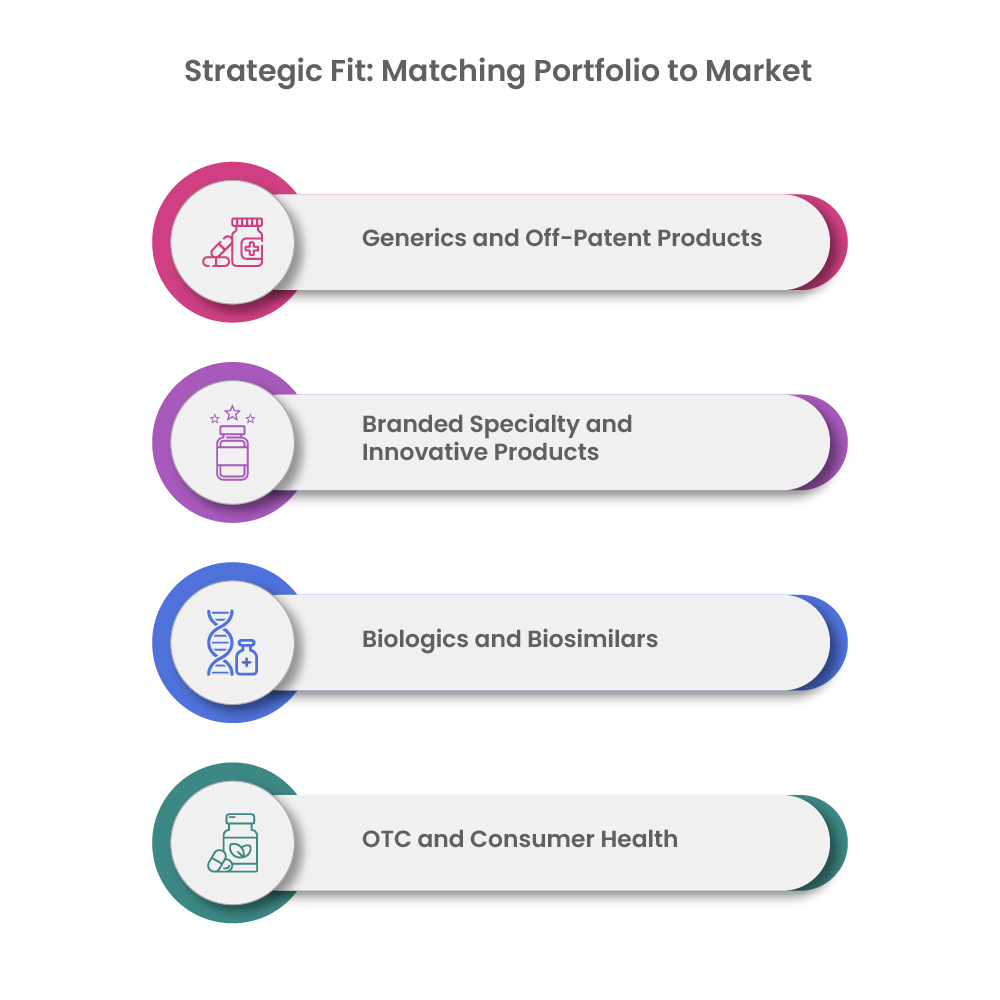
Figure1
4. Market Entry Considerations and Common Pitfalls
- Underestimating regulatory complexity: All three regions require significant regulatory investment. Budget for the full cost — dossier preparation, local clinical data requirements, post-approval maintenance — not just registration fees.
- Partner selection risk: In ASEAN and GCC markets, local partner selection is frequently the most consequential decision. Partner due diligence must include regulatory compliance assessment, not just commercial track record.
- Inadequate Pharmacovigilance infrastructure: All three regions are strengthening post-market surveillance requirements. Local Pharmacovigilance systems are not optional.
- Registration maintenance neglect: Renewals, variation filings, and post-approval change management are ongoing obligations. Under-investment here causes avoidable supply chain disruptions.
- Single-market vs. regional strategy: India offers highest volume; GCC offers highest value; ASEAN offers broadest geographic diversification. The optimal choice depends on portfolio characteristics and available regulatory investment.
Conclusion
India, ASEAN, and the GCC each represent significant and distinct Pharmaceutical expansion opportunities. The decision between them requires rigorous analysis of portfolio-market fit, regulatory navigability, commercial structure, and available investment.
CliniExperts supports global Pharmaceutical companies with market entry strategy, regulatory pathway planning, and authorised agent and distribution partner identification across India, ASEAN, and GCC markets.
Recent Posts
How to Manufacture Class A & B Medical Devices in India: State FDA License Guide
A quick guide on the Class A & B Medical Device manufacturing license — covering State FDA rules, Form MD-3/MD-5, fees, and timelines for manufacturers. Every manufacturer entering India’s..
Importing Small Quantities of Cosmetics for R&D in India: NOC Requirements
A brief guide on Cosmetic import NOC India — covering when small quantity Cosmetic import for R&D testing bypasses full registration under Cosmetic rules 2020. Not every Cosmetic shipment into I..
The Cosmeceuticals Grey Zone: When a Cosmetic Claim Risks Becoming a Drug Claim

“Cosmeceutical” is a popular marketing word. It suggests something more powerful than an ordinary Cosmetic — a product that treats skin condition, not just improves appearance. The problem is th..
Get In Touch With Our Team
-
Email: contact@cliniexperts.com
-
Timings: 9 am to 6 pm (Monday to Friday)
-
Location: India: Delhi, Bangalore Global: USA, Singapore